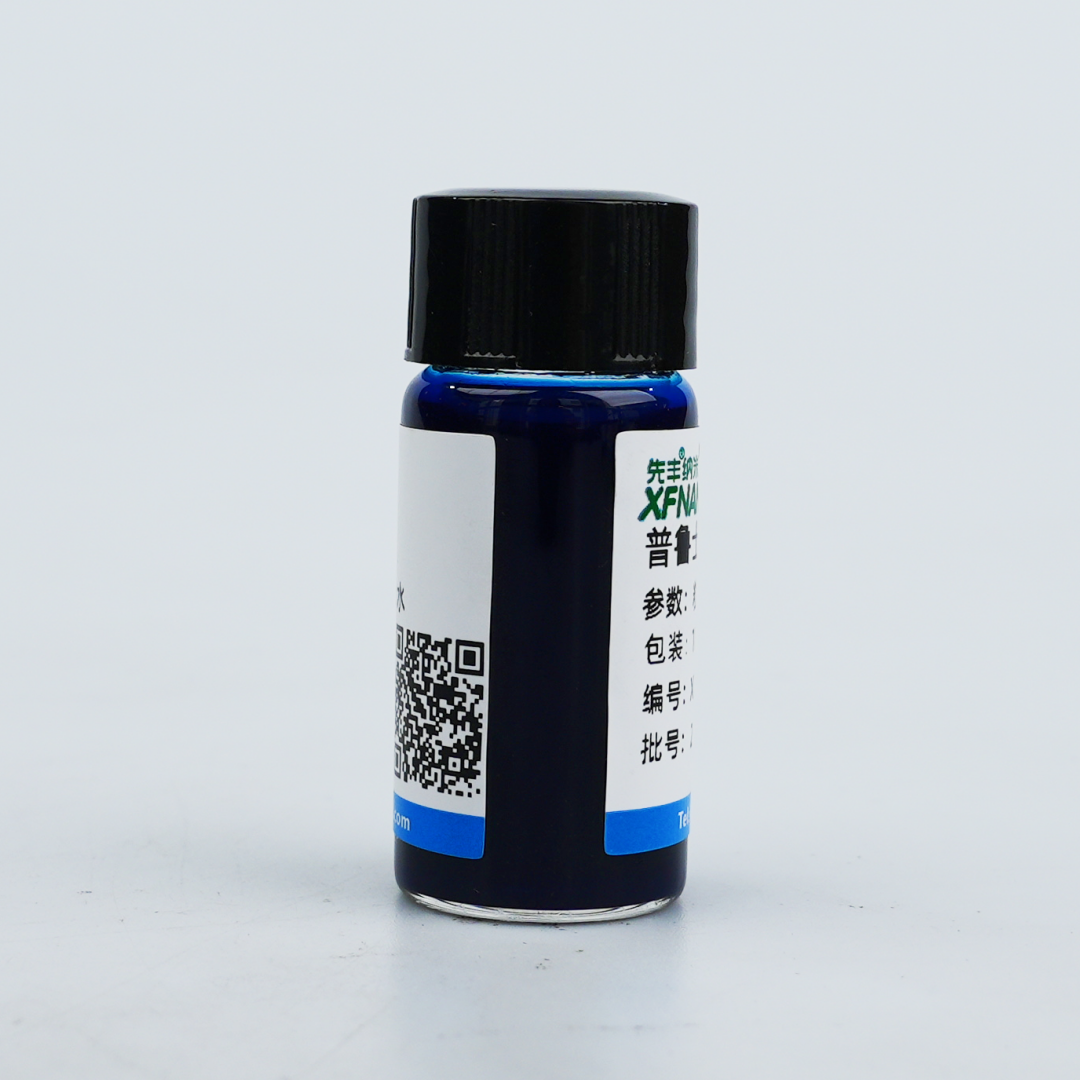
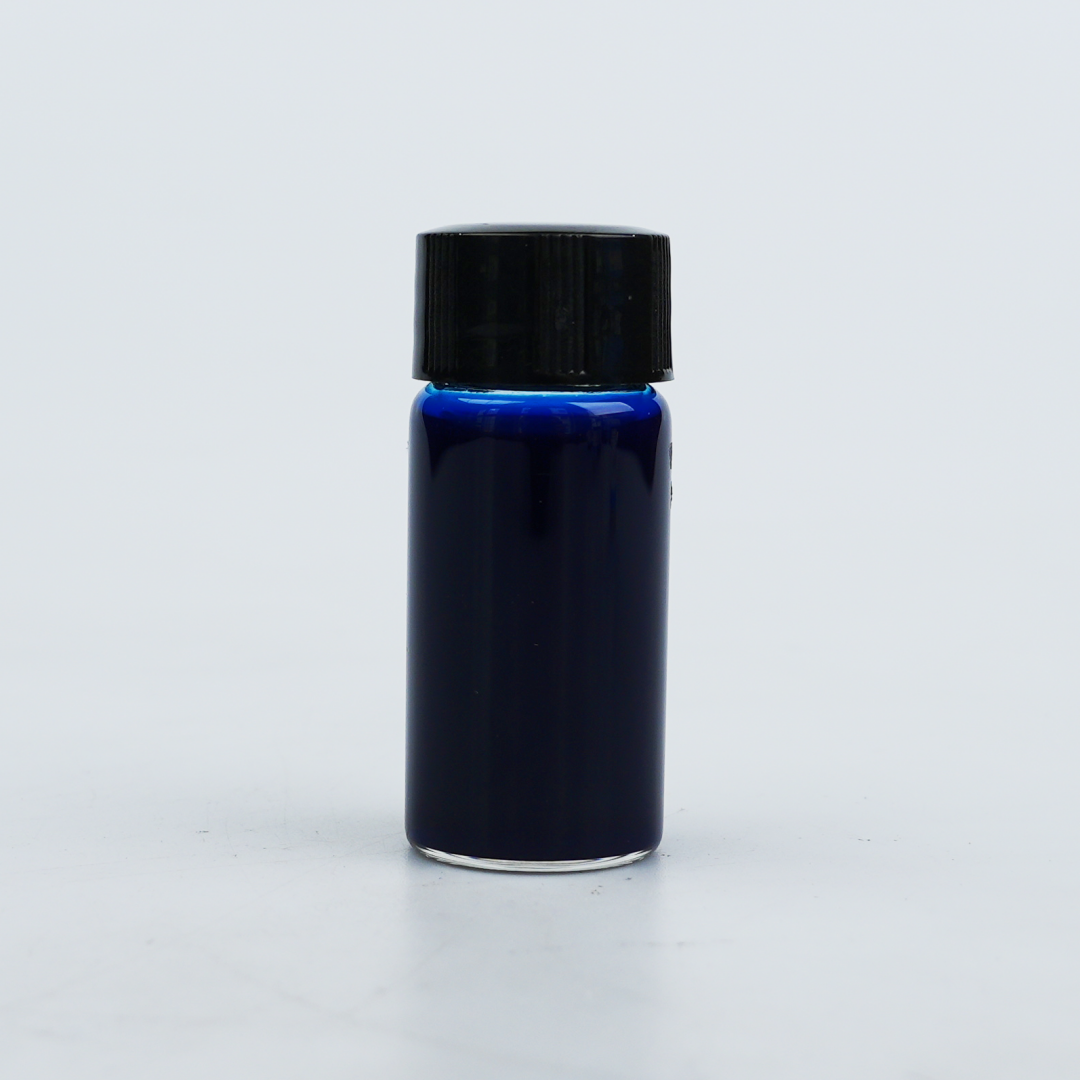

Prussian blue nanoparticles
NO.:101914 Code:XFJ103
CAS: Param:D:50nm-70nm,ρ:1mg/mL
Paproductckage:10ml Expdate:180days
{{personLoading ? (english ? 'Finding your sales contact…' : '正在匹配服务人员…') : (english ? 'No QR code available. Please leave a message.' : '暂无可用二维码,请留言咨询。')}}

Product Name
Name:Prussian blue nanoparticles
Product Overview
Prussian Blue (PB for short), also known as Teng's Blue or Ferrocyanide, is a polymeric complex composed of three elements: C, N, and Fe. It generally refers to Ferrocyanide, and its molecular formula is Fe4 [Fe (CN) 6] 3. PB can be used as an antidote for the treatment of thallium and cesium poisoning, and has good biological safety.
PB is synthesized by aging crystallization of potassium ferrocyanide and polyvinylpyrrolidone (PVP). The reaction mainly involves the coordination of CN bonds in potassium ferrocyanide with Fe3+and Fe2+to form crystal nuclei, while PVP is doped with its own CN bonds to form a crystalline structure. Hollow mesoporous Prussian blue (HMPB) is prepared by etching PB with hydrochloric acid, and the cavity structure can be used to load drugs to improve tumor treatment efficiency.
Technical Parameter
Diameter:50-70 /100-200
Concentration:1mg/mL
Solvent:water
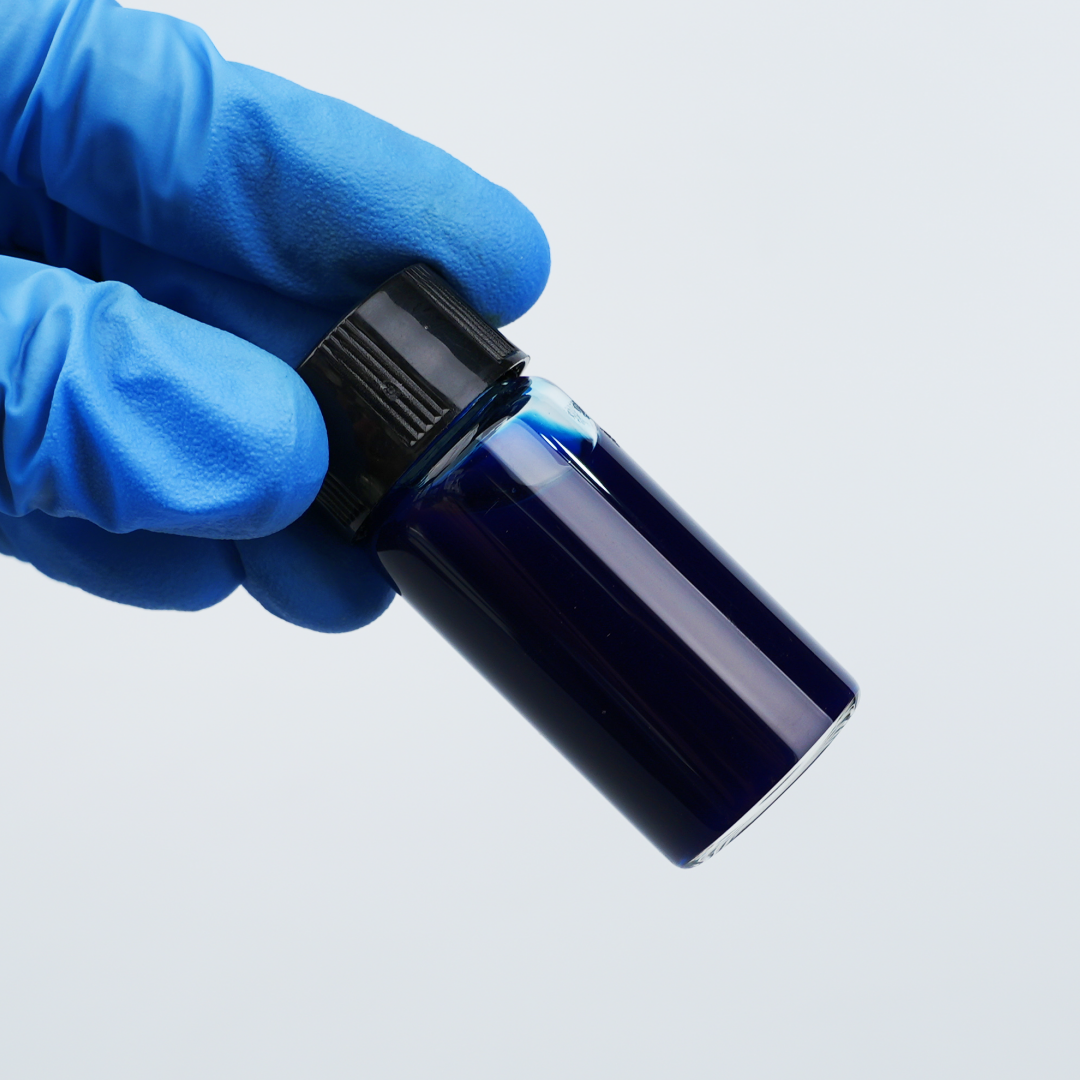
Appearance:Blue solution
Component:Fe[Fe(CN)6]
Product Features
1. Good dispersibility: The raw material PVP, as an amphiphilic substance, is easily soluble in water, resulting in PB with good water dispersibility.
2. Good drug loading capacity: The hollow mesoporous structure obtained by etching of this product has a large surface area and pore volume, which can be used as a nanocarrier to load small molecular substances such as drugs and genes, meeting different biomedical needs.
3. Multiple nano enzyme activities: PB has POD enzyme activity and can decompose H2O2 to produce hydroxyl radicals (· OH); Has SOD enzyme activity and can catalyze the production of H2O2 and O2 from peroxyl groups (· OOH); It has CAT activity and can decompose H2O2 to produce O2.
4. Excellent photothermal conversion efficiency: PB has good light absorption ability at 808 nm, which can convert light energy into heat energy. The generated heat can ablate tumor cells, and the increase in temperature can also enhance nanoenzyme activity.
Application Fields
1. Drug loading: PB, due to its unique hollow mesoporous structure, can load chemotherapy drugs, improve drug loading rate, and achieve targeted drug delivery through surface modification of targeted molecules, thereby improving therapeutic efficacy and slowing down drug side effects on normal cells.
2. Photothermal therapy: PB, due to its special lattice structure, has near-infrared light absorption characteristics and biological safety, and has been widely studied as a new type of photothermal conversion material in the application of tumor ablation.
3. Nanoenzyme therapy: PB has various nanoenzyme activities, such as POD, SOD, CAT enzyme activities, which can clear free radicals, slow down inflammation, alleviate oxidative stress reactions, catalyze hydrogen peroxide to produce oxygen, and alleviate tumor hypoxia.
4. Biomedical imaging: PBNPs have good magnetic resonance imaging (MRI) and photoacoustic imaging (PA) characteristics. At the same time, due to the advantages of their mesoporous structure and surface modification, fluorescence imaging and ultrasound imaging based on PB structure have also been synergistically used for disease diagnosis, leveraging the advantages of multimodal imaging.
Related Information
Please e-mail for the detailed characterization data.
E-mail:sales@xfnano.com

普鲁士蓝在催化、电池以及癌症治疗领域的应用
普鲁士蓝(Prussian Blue)即亚铁氰化铁,是一种配位化合物,最初被用作颜料和染料。近年来的研究发现,普鲁士蓝及其类似物(PBA)拥有一般MOFs比表面积大、孔隙率高的优点,在生物医药、临床治疗、催化和能源转换等领域都有广阔的应用前景,最近更是频繁登上各大顶刊。本期小丰整理了3篇普鲁士蓝的研究进展,一起了解下吧~
Adv. Mater:一步法合成Ni负载、空心核壳、硒掺杂特征的普鲁士蓝
通过引入多金属主元、阴离子掺杂和形貌构造,如核壳结构、空心结构、金属负载等,可以进一步提高普鲁士蓝类似物(PBA)的OER性能,但往往涉及复杂的多步合成路径。近日,Advanced Materials报道了研究人员通过低温热解前驱体/硒粉混合物, 一步合成改性多级PBA催化剂。该产物具有独特的Ni负载、空心核壳、硒掺杂特征,在碱性介质中兼具优异OER电催化性能(电流密度10 mA/cm2时过电位为184 mV,优于商用RuO2材料)和稳定性。对比实验与DFT计算结果,证实“一石三鸟”策略能显著提高PBA的本征活性与有效活性面积。该项工作对PBA及其他MOF材料的成分与结构设计具有借鉴意义。
文献名称:Enhancing Oxygen Evolution Reaction Performance in Prussian Blue Analogues: Triple-Play of Metal Exsolution, Hollow Interiors, and Anionic Regulation. Advanced Materials, 2023.
Energy Storage Mater:Ba2+电化学原位嵌入普鲁士蓝提高其稳定性
解决普鲁士蓝类似物(PBA)结构不稳定且残留间隙/结晶水问题,可以提高其作为钠离子电池正极时的循环稳定性。近日,Energy Storage materials报道了研究人员基于对外来多价阳离子的合理选择和协同控制,开发了一种通过原位电化学插入反应设计[A]位取代的钠基正极的新方法,以提高PBA的结构稳定性并促进钠离子扩散速率。特别地,当电池在充放电过程中进行时,Ba2+可以通过原位电化学反应插入PBA晶格中,保持框架稳定性和防止残余水进入晶格。通过合理控制电解质中Ba2+的添加量,所制备的正极表现出显著增强的结构稳定性,150次循环后容量保持率为96.6%,即使在6C下也能提供83.41mAh g-1的容量。这项工作为开发钠离子电池中高性能正极材料的碱位替代策略提供了重要见解。
文献名称:Barium ions act as defenders to prevent water from entering prussian blue lattice for sodium-ion battery
Nat. Commun. :具有分离活性位点的普鲁士蓝用于CDT治疗
化学动力学治疗(Chemodynamic therapy,CDT)借助于肿瘤微环境弱酸和H2O2过量的特性,利用Fenton或类-Fenton反应将弱氧化性的H2O2催化转化成强氧化性的 ‧OH,从而可用于肿瘤治疗。近日,Nature Communications报道了一种水氧化钴铁普鲁士蓝(CFPB)纳米框架,可从 H2O 中提供持续的、外部无能量的 ‧OH ,用于 CDT 和/或光热疗法(PTT)。值得注意的事,该项研究中制备的CFPB 纳米立方体和纳米框架都能从 H2O 中自供 O2、H2O2 和 ‧OH,其中纳米框架在产生 ‧OH 方面表现更好。模拟分析表明,CFPB 在催化水氧化、氧还原和 Fenton 类反应时具有分离的活性位点。制备的脂质体包覆 CFPB 纳米框架可用于治疗雄性肿瘤小鼠的可控水驱动 CDT。
文献名称:Prussian blue analog with separated active sites to catalyze water driven enhanced catalytic treatments
 Delivery
The postage for Jiangsu, Zhejiang, Shanghai and Anhui is10yun,Other areas are20, Please consult for international shipping sales@xfnano.com。full purchase 500.0 yuan free shipping. If the stock shows 0, please call or email to confirm, toll free:400 025 3200 Email-:sale@xfnano.com Thanks for the support!
 Recommend